
IOD PARC evaluated an education project in Nepal’s Solukhumbu district, home to Mount Everest, which was implemented by the Himalayan Trust Nepal with financial support from New Zealand’s Ministry of Foreign Affairs and Trade and Himalayan Trust New Zealand.
In line with our organisational commitment to localise our work, this evaluation was grounded in the expertise of Nepali evaluators, whose deep knowledge and understanding of the area made our ways of working much more effective than they might have been otherwise, and the findings more nuanced and informed, making them more useful for future programming.
This blog is based on reflections from IOD’s Roeland Hemsteede and insights from our long-standing Nepali associate, Rita Shrestha, both of whom worked on this evaluation.
Understanding unique contexts
The complex landscape of Nepal’s (primary) education system – where local governments are chronically underfunded and schools often depend on multiple external funding sources – requires in-depth local understanding for any evaluation to be relevant. Several factors influenced our approach and required the expertise of Nepali evaluators to navigate, including:
- The roles and responsibilities of local education stakeholders
- The patchwork of education funding in Solukhumbu and Nepal more broadly
- Seasonal labour patterns (such as trekking) affecting student attendance
- The schemes and incentives that mean staff stay or move on from schools
- The impact of ethnic and cultural dynamics on how we interact with stakeholders
- How political party affiliations impact school interactions
“Understanding the local context of Solukhumbu was very important to conducting a meaningful and credible evaluation, with diverse ethnic groups, remote geographies, and unique socio-cultural dynamics needing to be understood. Without this, it would have been difficult to accurately assess programme relevance, effectiveness, or sustainability.” – Rita Shrestha
The evaluation found that the Himalaya Trust’s support was hugely important. Schools received critical resources, such as training and teaching materials, and created more engaging learning environments, especially for younger students. However, the programme also highlighted the reality that when external support stops, the progress made can quickly unravel – and one of our recommendations focused on making interventions more sustainable in the medium- and long-term.
“Our local experience helped uncover layered issues around sustainability that may not be immediately visible to outsiders. There was higher acceptance during interactions, familiar faces established a level of comfort, which helped in deeper understanding of surficial issues faced by the community as well as internal unheard, unspoken/unshared issues. Cultural fluency allowed us to ask the right questions in the right way and to gain trust during focus groups or interviews, to better identify problems and find long-term sustainable solutions to uplift the community.” – Rita Shrestha
Ensuring equal partnerships
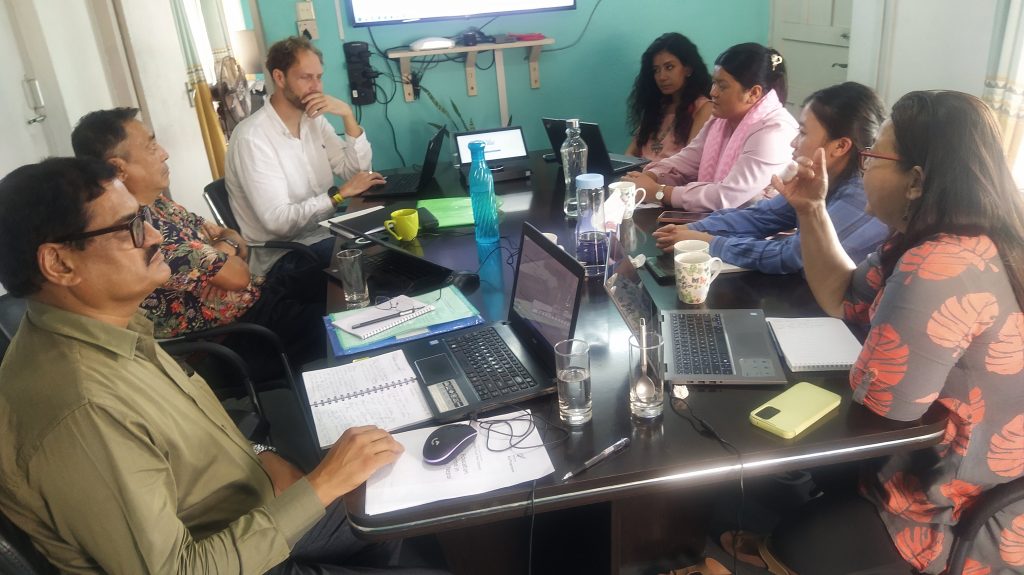
In addition to providing invaluable input into our contextual understanding of the educational environment, our Nepali evaluators supported the development of the evaluation’s conceptual framework and facilitated interviews and workshops. They contributed to the analysis of findings, which helped ensure that our recommendations were contextually relevant and meaningful. We also built in a feedback loop with stakeholders, translating our findings into Nepali so that those working in the schools could engage with the evaluation results and see what their inputs had contributed to.
“I believe international firms should see local associates as equal partners, not just logistical support. Engaging us early during design, tool development, and methodological planning strengthens both the rigour and relevance of the evaluation.
The open-minded mindset, learning environment, trust, and respect provided by the IOD PARC team had a positive impact and it is a good approach. It was a collaborative approach which involved contribution in different phases from planning to execution as well as post implementation, and resulted in good/fruitful work experiences. Additionally, creating space for joint reflection and analysis allows our insights to shape conclusions and recommendations more effectively.” – Rita Shrestha
As an organisation, we recognise that embedding the principles of locally led development across our work is essential for effective monitoring, evaluation, and learning, and ultimately, sustainable impact. We know we have more to do to make this a consistent approach internally, with our partners and clients, and with our global network of associates. This evaluation demonstrated the benefits of locally led development and is a model we intend to adapt and expand.


